

How Much Does Secondary Glazing Cost in the UK? (2026 Price Guide)
 glasswise.org
Secondary glazing is the smartest way to make period, listed and hard-to-heat windows warmer and quieter without replacing them — and it costs far less than new double-glazed windows. This 2026 guide breaks down exactly what secondary glazing costs in the UK: per window, per square metre, by style and glass type, and installed, with real prices you can check instantly.
Secondary glazing cost — quick answer
- Per window: £160–£280 (small), £330–£630 (medium), £620–£1,150 (large) — supplied & fitted.
- Per square metre: £291–£460 depending on style, with standard glass.
- Acoustic glass upgrade: +£72 per m² (Saint-Gobain Stadip Silence™ laminated).
- Coloured (RAL) frame: +£174 per window over standard white.
- Whole home (8–12 windows): £3,000–£8,000, with multi-window discounts up to 50%.
- vs double glazing: roughly half the price, and allowed in listed buildings.
Use our free secondary glazing cost calculator to get your exact, itemised price in 30 seconds — including the expected noise reduction (dB) and annual heating saving.
- Cost per window
- Cost per square metre
- Cost by window style
- Cost by glass type
- Acoustic secondary glazing
- Thermal & energy savings
- Frame finish & colour
- What affects the cost
- Cost breakdown
- What's in a quote
- Installation time
- DIY vs professional
- vs double glazing
- Listed buildings
- Bay & whole-house
- Cost in London
- Is it worth it?
- Does it add value?
- Grants & funding
- Maintenance & lifetime
- How to save money
- FAQs
How much does secondary glazing cost per window?
Secondary glazing is priced by the glazed area of each window, so cost scales with size. As a guide, expect the following supplied-and-fitted prices in 2026:
| Window size | Approx. area | Cost (standard glass) | Cost (acoustic glass) |
|---|---|---|---|
| Small (e.g. 600 × 900mm) | 0.54 m² | £160 – £280 | £200 – £320 |
| Medium (e.g. 900 × 1500mm) | 1.35 m² | £390 – £630 | £490 – £730 |
| Large (e.g. 1200 × 1800mm) | 2.16 m² | £620 – £1,000 | £780 – £1,150 |
| Extra-large / door panel | 2.5 m²+ | £730+ | £910+ |
The spread within each row reflects the opening style you choose (a fixed lift-out panel is cheapest; a hinged casement is dearest — see cost by style below).
Secondary glazing cost per square metre
The clearest way to compare quotes is cost per m². Our installed prices, by style, are:
| Window style | Price per m² | Example: 0.9 × 1.5m (1.35 m²) |
|---|---|---|
| Lift-out panel (fixed, removable) | £291 | £393 |
| Horizontal slider | £353 | £477 |
| Vertical slider (classic sash) | £439 | £593 |
| Casement (premium hinged) | £460 | £621 |
A minimum charged area of 0.5 m² applies to very small windows. Because secondary glazing is priced per m², a handful of large windows can be better value per unit of area than many tiny ones.
Secondary glazing cost by window style
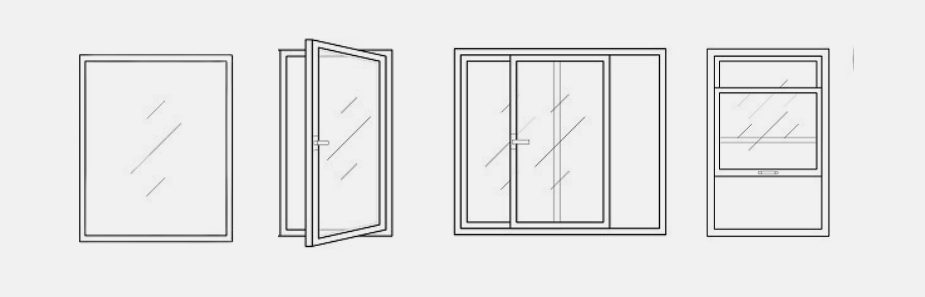
The opening style is the biggest single driver of price after size:
- Lift-out panel (from £291/m²) — a fixed, fully removable pane. The most affordable and the most discreet; ideal for windows you rarely open.
- Horizontal slider (from £353/m²) — slides side-to-side for easy ventilation and cleaning; suits wide windows and casements.
- Vertical slider (from £439/m²) — the classic sash match; slides up and down to mirror the original sash window. The most popular choice for period homes.
- Casement / hinged (from £460/m²) — premium hinged opening for full access; the highest-spec option.
Secondary glazing cost by glass type
| Glass | Added cost | Noise reduction | Best for |
|---|---|---|---|
 4mm toughened (standard) 4mm toughened (standard) | Included | ~20 dB (≈40% blocked) | Thermal comfort, general rooms |
 6.4mm Saint-Gobain Stadip Silence™ (acoustic laminated) 6.4mm Saint-Gobain Stadip Silence™ (acoustic laminated) | +£72/m² | ~30 dB (≈55% blocked) | Busy roads, flight paths, railways |
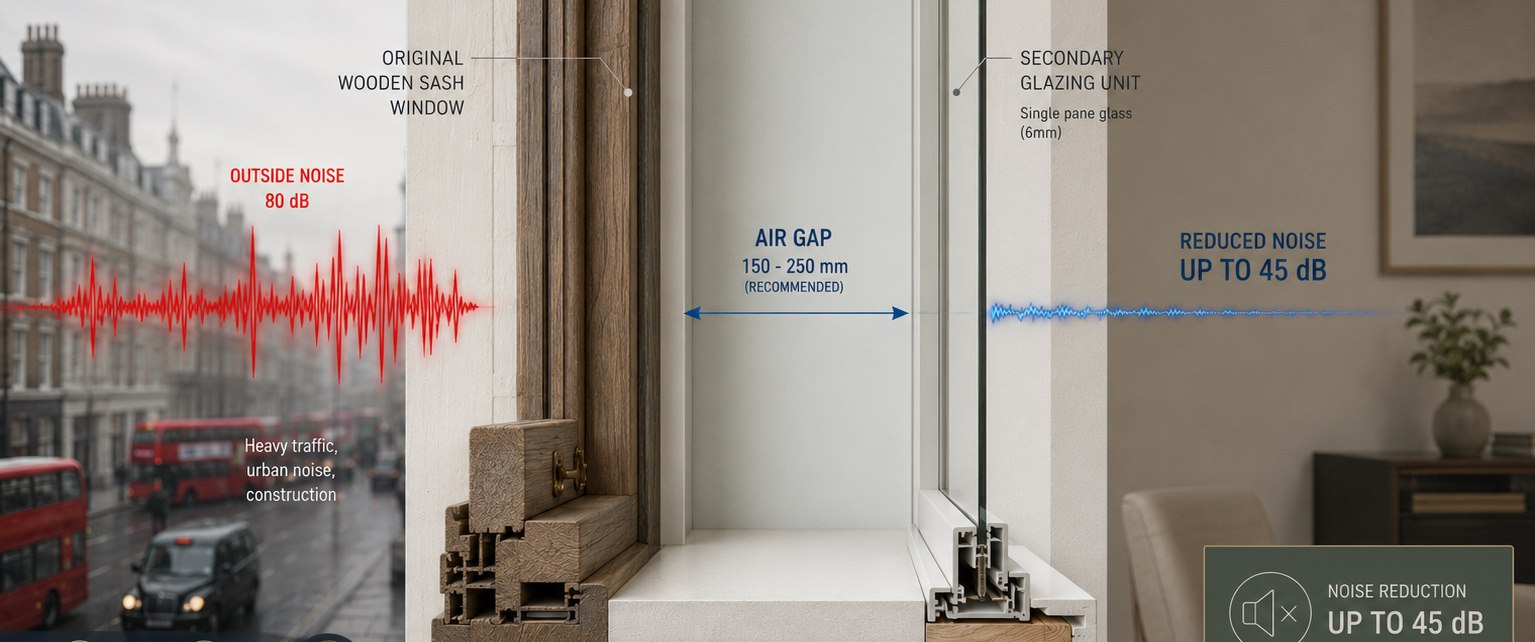
Acoustic laminated glass is a specialist 3-ply glass with a sound-damping interlayer. Combined with the wide air gap that secondary glazing creates, it delivers dramatically better noise control than a sealed double-glazed unit — which is why secondary glazing is the go-to solution for noise.
Acoustic secondary glazing cost
For noise, the upgrade to Saint-Gobain acoustic glass adds around £72 per m² — roughly £97 on a typical 0.9 × 1.5m window. That buys about 30 dB of noise reduction (a ~55% cut in perceived noise). The performance comes from the large cavity between your original window and the secondary unit — the bigger the air gap, the better the acoustic result, which sealed double glazing cannot match.
Thermal performance & energy savings
Secondary glazing cuts heat loss through windows by up to 60% and eliminates draughts. In practice that saves around £68 per window per year on heating — so a whole period home can save several hundred pounds annually, giving a payback of just a few years on top of the year-round comfort. The cost calculator shows your estimated saving alongside the price.
Frame finish & colour cost
Standard frames are slim white or a range of stock finishes at no extra cost. A bespoke colour matched to any RAL shade (to blend with your existing joinery) adds around £174 per window. Low-profile aluminium frames are deliberately minimal so they all but disappear against the original window.
What affects the cost of secondary glazing?
- Window size — priced per m², so bigger windows cost more (but often less per m²).
- Opening style — fixed lift-out cheapest → hinged casement dearest.
- Glass spec — standard vs acoustic laminated (+£72/m²).
- Frame finish — white/stock included; bespoke RAL colour +£174/window.
- Number of windows — multi-window discounts up to 50%.
- Access & shape — bays, arches, very tall sashes and awkward access add labour.
- Location — London and the South East sit at the higher end of national rates.
Secondary glazing cost breakdown — what you're paying for
It helps to understand where the money goes. A made-to-measure secondary glazing price is made up of:
- The aluminium frame — precision-milled, powder-coated and made to the exact size of your reveal. This is the largest single component of cost.
- The glass — standard 4mm toughened, or acoustic 6.4mm Saint-Gobain laminated where noise is the priority.
- Seals, brush-pile and fixings — the weatherproofing detail that actually delivers the thermal and acoustic gain.
- Survey & installation labour — accurate measuring, tight manufacturing tolerances and skilled internal fitting.
- Guarantee & aftercare — long-term cover on the frame and seals.
Unlike a vague "per window" figure, our calculator itemises these elements so you can see exactly what drives your price — and check any quote against it.
What's included in a secondary glazing quote?
A proper supplied-and-fitted quote should cover: a site survey and measure; made-to-measure aluminium frame and glass; all seals, fixings and trims; professional internal installation; removal of packaging; and a guarantee. On this site the calculator price already includes supply and fit — your fixed final price is confirmed after a free, no-obligation survey.
How long does secondary glazing take to install?
Each window takes roughly 30–60 minutes to fit. A typical home of 8–12 windows is completed in one to two days. Everything is done internally, so there's no scaffolding, no mess, and your original windows stay exactly as they are.
DIY vs professional installation
DIY magnetic or acrylic film kits start at around £60–£150 per window and can take the edge off draughts, but they're far less effective acoustically, less durable, and rarely look discreet on period windows. Professionally surveyed, made-to-measure aluminium units cost more but deliver the real noise, thermal and aesthetic results — and come with a guarantee. For listed and period homes, professional installation is strongly recommended.
Secondary glazing vs double glazing — cost & comparison
| Secondary glazing | Replacement double glazing | |
|---|---|---|
| Typical cost per window | £250 – £700 | £600 – £1,500 |
| Allowed in listed buildings | ✔ Yes (reversible) | ✘ Usually refused |
| Keeps original windows | ✔ Yes | ✘ No — removed |
| Noise reduction | ✔ Excellent (wide air gap) | Moderate |
| Disruption | ✔ Minimal, internal | High — windows removed |
| Install time (whole home) | 1–2 days | Several days |
Secondary glazing for listed buildings & conservation areas
Because low-profile aluminium secondary glazing is fitted internally and is fully reversible, it leaves the original window untouched — so it's typically permitted in Grade I and Grade II listed buildings and conservation areas where replacement double glazing would be refused. English Heritage recognises it as one of the most effective, least intrusive ways to upgrade historic windows. There's no additional "listed building" surcharge — you pay the same per-m² price — though very tall or ornate sashes may add a little labour.
Bay window & whole-house costs
A bay window is priced as its individual panes (usually three to five), so cost tracks the total glazed area — a typical three-pane bay runs about £700–£1,400 supplied and fitted. For a whole home, budget £3,000–£8,000 for 8–12 windows, before multi-window discounts. Price every window exactly with the calculator.
Secondary glazing cost in London
London and the South East sit at the upper end of UK rates, reflecting the concentration of listed and period properties and specialist installers. The per-m² prices in this guide are London supplied-and-fitted prices from Glasswise, a London listed-building specialist — so they already reflect the capital's rates rather than a national average.
Is secondary glazing worth it?
For noise, warmth and draughts — particularly where you can't or don't want to replace the original windows — secondary glazing is excellent value. It's roughly half the cost of replacement double glazing, keeps your period windows, is fitted in a day, and typically pays back through heating savings within a few years while adding year-round comfort and reducing condensation.
Does secondary glazing add value to your home?
Secondary glazing improves comfort, noise levels and energy efficiency — all of which support a property's value and saleability, especially for flats on busy roads and period homes where buyers expect warmth without losing original character. Because it improves thermal performance, it can also contribute to a better EPC rating without the cost, disruption or planning hurdles of replacement windows.
Grants & funding for secondary glazing
Because it's an energy-efficiency measure, secondary glazing can sometimes fall within home-improvement, heritage or local conservation funding — availability changes over time and by area, so it's worth checking current government energy schemes and your local authority's conservation grants before you buy. Even without a grant, the annual heating saving of around £68 per window offsets the cost within a few years.
Maintenance & lifetime cost
Running costs are minimal. Low-profile aluminium frames don't rot, rust or warp, and need nothing more than an occasional wipe and the odd seal replacement over a 20-year-plus life. Fixed lift-out panels have no moving parts to fail, and sliders and casements use simple, durable hardware. Unlike timber single glazing you never repaint or re-putty them, and set against the annual heating saving the whole-life cost is very low — a big part of why secondary glazing is such a cost-effective upgrade for period and listed homes.
How to save money on secondary glazing
- Do several windows at once — multi-window discounts reach up to 50%.
- Match glass to the room — standard glass for quiet rooms; acoustic only where noise is the issue.
- Choose lift-out panels for windows you rarely open — the cheapest style.
- Stick to standard white frames unless a colour match is essential.
- Get an exact price first with the free calculator, then a free survey — and we beat any like-for-like quote.
Get your exact secondary glazing price in 30 seconds
Enter your window size, style and glass for a live, itemised cost — plus your noise reduction and heating saving. Free, no sign-up.
Open the free cost calculator →Secondary glazing cost FAQs
How much does secondary glazing cost?
In 2026, £160–£1,150 per window supplied and fitted depending on size, style and glass. As a rule of thumb, £291–£460 per m² for the frame with standard glass, plus £72/m² for acoustic glass. A whole home (8–12 windows) is usually £3,000–£8,000.
How much is secondary glazing per window?
Small window ~£160–£280; medium ~£330–£630; large ~£620–£1,150 (supplied & fitted). Acoustic glass adds ~£72/m² and a coloured RAL frame ~£174/window.
How much does secondary glazing cost per square metre?
About £291–£460/m² supplied and fitted: lift-out from £291, horizontal slider £353, vertical (sash) slider £439, casement £460. Acoustic laminated glass adds ~£72/m².
Is secondary glazing cheaper than double glazing?
Yes — secondary glazing is typically £250–£700 per window vs £600–£1,500 for replacement double-glazed windows, with no structural work and no listed-building restrictions.
How much does acoustic secondary glazing cost?
Acoustic laminated glass (Saint-Gobain Stadip Silence) adds ~£72/m² — around £97 on a typical 0.9×1.5m window — for ~30 dB of noise reduction (≈55% of noise blocked).
How much can secondary glazing save on heating?
Around £68 per window per year, cutting window heat loss by up to 60% — often several hundred pounds a year across a whole home, with a payback of a few years.
Can you get secondary glazing on listed buildings?
Yes. It's fitted internally, fully reversible and English Heritage approved, so it's widely accepted in Grade I and II listed buildings and conservation areas where double glazing is refused.
What's included in a secondary glazing quote?
Survey, made-to-measure frame and glass, all seals and fixings, professional internal installation, and a guarantee. Our calculator price already covers supply and fit.
How long does secondary glazing take to install?
About 30–60 minutes per window; a typical home of 8–12 windows takes one to two days, all done internally with no mess.
How long does secondary glazing last?
20 years or more. Aluminium frames don't rot or warp, seals are replaceable, and units are guaranteed.
What's the difference between secondary glazing and double glazing?
Double glazing replaces the whole window with a sealed unit; secondary glazing adds a slim internal pane behind the existing window. Secondary glazing is cheaper, reversible, listed-building friendly and better at reducing noise.
Can secondary glazing be DIY fitted?
DIY kits exist (~£60–£150/window) but are far less effective and less discreet. For real performance and a period-appropriate finish, professional made-to-measure units are recommended.
How much does secondary glazing cost for a bay window?
A bay is priced as its individual panes; a typical three-pane bay is ~£700–£1,400 supplied and fitted. Price each pane with the calculator.
Does secondary glazing cause condensation?
No — it usually reduces condensation by keeping the inner pane warmer and controlling the air gap, cutting the risk of condensation on the room-side glass.
What affects the cost of secondary glazing?
The main factors are window size (priced per m²), opening style (fixed lift-out cheapest, hinged casement dearest), glass spec (standard vs acoustic laminated, +£72/m²), frame finish (white included; RAL colour +£174/window), the number of windows (discounts up to 50%) and access or shape such as bays and tall sashes.
Is secondary glazing worth it?
For noise, warmth and draught reduction — especially in period or listed homes where you can't replace the windows — it's excellent value. It's roughly half the cost of replacement double glazing, keeps the original windows, is fitted in a day, and typically pays back through heating savings within a few years.
Ready for your exact price?
Get a free, itemised secondary glazing quote online — or book a free, no-obligation home survey with Glasswise.
Calculate my cost →